by in

“Through Their Eyes” - Reshaping how we support children's mental health

In the aftermath of crisis, adults often rush to reassure, respond and rebuild children’s lives. In Professor Ben Arieh’s experience the most striking insights into how Israeli children and young people have coped with trauma in the last two years have come from listening directly to children themselves.

Speaking at a March 2026 AUSiMED event co-hosted by Chabad Malvern, Professor Ben-Arieh (Dean of Social Work at Hebrew University of Jerusalem), shared two stories that reveal a powerful truth: Children’s perspectives on coping, support and resilience often differ sharply from adult assumptions.

In early December 2023, the Israeli education system decided that the high school children displaced from their communities (kibbutzim) in the Gaza envelope needed to go back to school in the city that they were evacuated to. The 12th graders refused to go.  They insisted that they needed to stay together with their peers. They argued that their friendships, not structure, was what they needed to cope. Within three days, together with the help of some parents, a school was opened for them in Ein Gedi and they finished the school year together.

The second story came from Madj al Shams, a Druze town on Israel’s northern border where 12 children were killed in 2024 when a Hezbollah rocket struck a packed soccer field. The local council made plans to turn the site of the tragedy into a memorial. The children said they wanted something different: a space to play soccer, to remember their friends through joy rather than grief.

The Giving Voice to Children Project, an Australia-Israel research collaboration led by Professor Asher Ben-Arieh and Professor Sharon Goldfeld AM, Director of Population Studies at Murdoch Children’s Research Institute (MCRI) in Melbourne, is challenging current assumptions about how best to support children experiencing adversity and trauma.

At its core lies a simple but transformative idea: children are active interpreters of their own experiences, and their perspectives must be incorporated research, policy and professional practice.

Professor Goldfeld highlights that current approaches to trauma are largely based on adult concepts and may fail to align with children’s lived realities.

“We don’t have a good way of thinking about trauma with a child-centred view,” she explains. “We don’t understand how children understand coping, support and resilience and because of that, interventions may not meet children’s needs.”

The Giving Voice to Children project combines the MCRI teams’ expertise in child mental health and wellbeing and in meaningfully engaging children, with the Israeli teams’ expertise in child participation, early childhood trauma and research with Palestinian and Arab children.

The project goal is ambitious. They plan to build a child-informed framework for understanding how young people cope with adversity. A framework that reflects diverse cultural, social and familial contexts.

The research will involve using creative, narrative-based methods with children aged 6 to 12 in both countries, to explore questions such as:

  • What helps you feel safe?
  • What helps you move forward?
  • What helps you stay strong?

Insights gathered from these conversations will inform a large-scale survey of 500 children, that will be used to design new child-informed tools, policies and professional training.

The Giving Voice to Children project is calling for a shift in mindset: A shift from doing thing to children to doing things with children.

By incorporating children’s own perspectives into trauma-informed frameworks and tools, the project will help reshape how health, welfare and education professionals support children’s mental health and wellbeing.

For more information about how to support the Giving Voice to Children project contact:                    Dr Karen Teshuva, AUSiMED Executive Director – karen@ausimed.org or CLICK HERE.

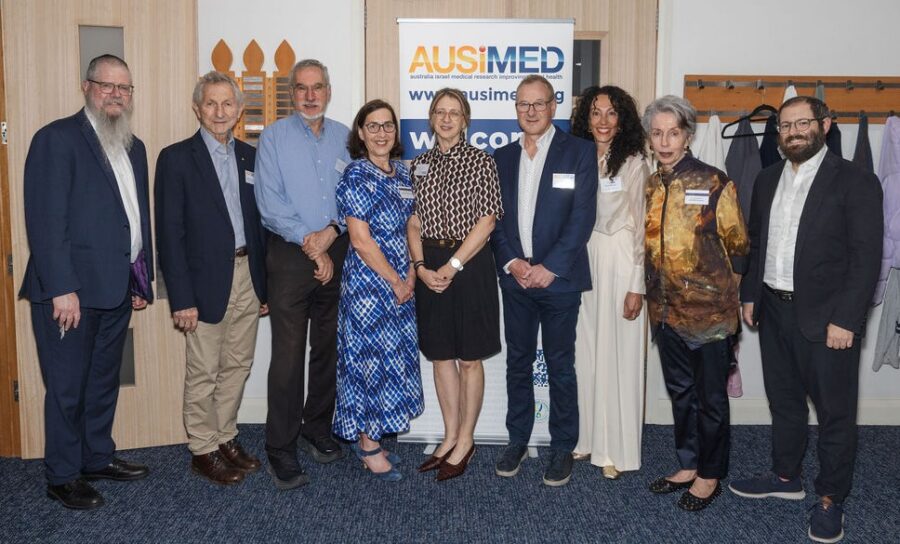
Pictured L-R:  Rabbi S. Jurkowicz,Prof F. Oberklaid AM, Prof R. Coppel AO, Dr K. Teshuva, Prof S. Goldfeld AM, A. Cohen, D. Travers, S. Benjamin, Rabbi V. Slavin
by in

A Meeting of Generations and Impact

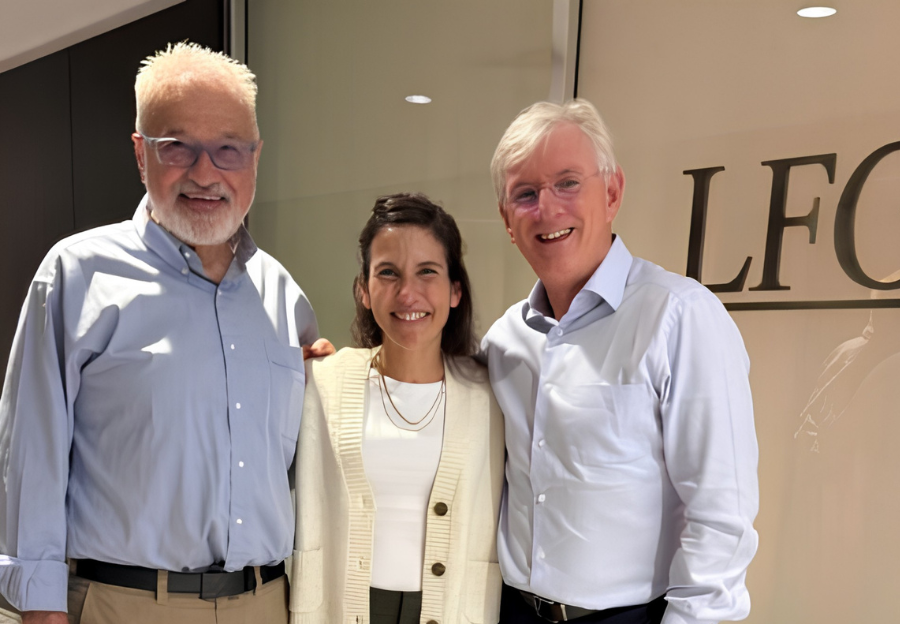
Dr Naama Shwartz, AUSiMED’s 12th Lowy Paediatric Fellow, recently met with Mr Steven Lowy AM, whose family’s philanthropy has been central to the success of AUSiMED’s Fellowships program, and Emeritus Professor Leslie White AM, AUSiMED Patron, former NSW Chief Paediatrician and the earliest and ongoing champions of the program.

Standing together, they reflect the unique partnership between philanthropy, clinical excellence and international collaboration that defines AUSiMED.

Dr Naama Shartz-Pines, a paediatric emergency medicine specialist from Hadassah Medical Center. Naama is currently receiving advanced training in medical toxicology at the Austin Hospital in Melbourne. Over the next year, she will work alongside leading toxicologists and specialists at the Victorian Poisons Information Centre, gaining critical expertise in managing poisoning cases and chemical exposure incidents, an area of growing urgency in modern healthcare.

Israel currently faces a shortage of specialists in medical toxicology, with no formal local training pathway. Upon her return, Naama will establish a dedicated toxicology service at Hadassah Medical Center, addressing a significant national gap and strengthening preparedness for both everyday emergencies and large-scale incidents. Naama’s fellowship is co-funded by the AUSiMED Lowy Paediatric Fellowships Program and Hadassah Australia.

It is noteworthy that Naama has been mentored and supported in her career development by Dr Saar Hashavia, who was the first Lowy fellow in 2014  and since his return to Israel in 2015 has been  Head of Paediatric Emergency Medicine at Hadassah Medical Center.

A Program That Bridges Between Australia and Israel

Since its establishment in 2014, the Lowy Fellowships program has enabled 12 of Israel’s most promising doctors and researchers to train at leading Australian medical institutions in fields where equivalent opportunities did not exist at home. The consequent impact on children’s healthcare has been welcomed both in Israel and in Australia.

The Lowy Fellows have trained across 12 Australian institutions in three states and are now contributing their expertise across six major medical institutions in Israel – Hadassah, Rambam, Sheba, and Schneider Children’s Medical Centers, Goshen National Centre for Community Child Health and Clalit Health Services; and maintaining their collaborative research partnerships with their host institutions in Australia.

The Lowy Fellows’ specialties span a remarkable breadth: from cardiology and cystic fibrosis to neurology and respiratory diseases. Reflecting the diversity of Israeli society, AUSiMED fellows come from Jewish, Muslim, Christian and Druze backgrounds, united by a shared commitment to advancing healthcare in Israel.

Antony Cohen, AUSiMED Chair, says: “As AUSiMED reflects on 12 years of progress, the scale of impact is clear: the Lowy Fellowships Program has not only transformed individual careers but has reshaped healthcare delivery systems across continents.”

Transforming Healthcare Locally and Internationally

The achievements of AUSiMED Fellows have been profound. Collectively, they have:

  • Taken on senior leadership roles across Israel’s leading medical institutions;
  • Introduced life-saving treatments, diagnostic tools and new models of care;
  • Driven major improvements in healthcare delivery;
  • Built international medical research partnerships; and
  • Trained the next generation of medical professionals, both nationally and internationally.

Looking Ahead

As AUSiMED looks ahead, emerging areas such as digital health solutions, emergency medicine, mental health and wellbeing and PTSD present new opportunities for impactful Australia-Israel fellowships.

In a world where medical innovation depends increasingly on global collaboration, the AUSiMED Lowy Paediatric Fellowships Program stands as a powerful example of what sustained vision, philanthropy and partnership can achieve and demonstrates that when we invest in people and partnerships, the benefits are felt everywhere.

Head to the AUSiMED website for more information about achievement of our  Fellowships program. https://www.ausimed.org/ausimed-fellows/

For more information about AUSiMED, please contact: Dr Karen Teshuva, Executive Director |  karen@ausimed.org